
A faster website with cache?

Enabling or increasing page caching on the web server can make your website much faster. How much faster depends on the server, website size and number of visitors. On a Pro 1 Server, a website with around 100 pages can save about half a second per page, often an improvement of 25–50%.
How do we configure it?
- Log in to the management system and open the website management module. Open the settings at the top right. If this button is absent, you do not have enough permission to change the settings. We can configure them for you: contact support.
- In the “Basic website configuration” tab, scroll to the bottom and find “Page cache”. A higher setting generally benefits website speed.
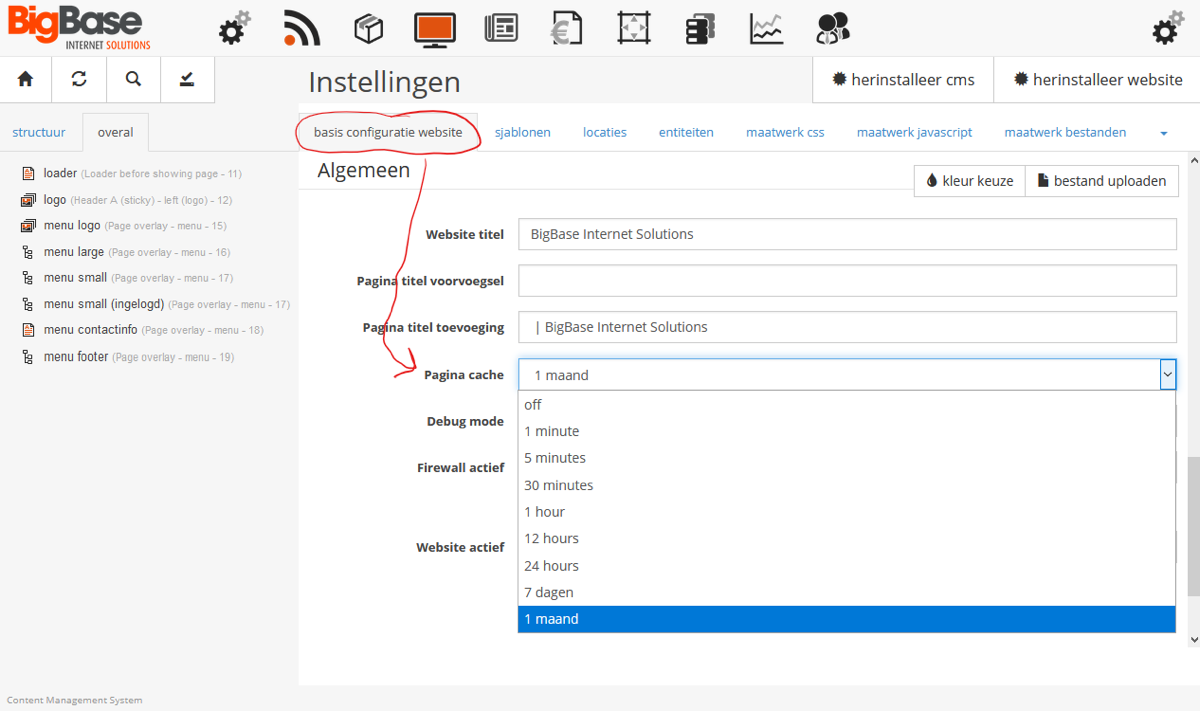
Cannot see the “Basic website configuration” tab? You have an older system version. We can help with an update or configure caching for you.
What are the disadvantages?
Page caching has a drawback, but understanding how it works makes that drawback easy to manage.
How does it work exactly?
When a visitor opens a page, the web server builds it by combining all its content into a single page. Once it is ready, the server sends it to the visitor. Building it might take half a second. The server also stores a copy of the complete page in the page cache. When another visitor requests it, the server can send that stored copy instead of rebuilding the page. The visitor sees the page half a second sooner.
A problem arises when the page changes, for example when you add text. Visitors may still see the older cached version. That is fine while you are editing, but once the new content is ready, you want visitors to see it. Clear the page cache when you finish editing. You can do this manually with the “Publish” button or automatically through the CMS settings, for example after an hour, a day or a month.
Always click “Publish” at the top left when you have finished changing the website.

One detail to remember: opening a page from the CMS with “Show page” always displays the new version. The cache is not used in that case.